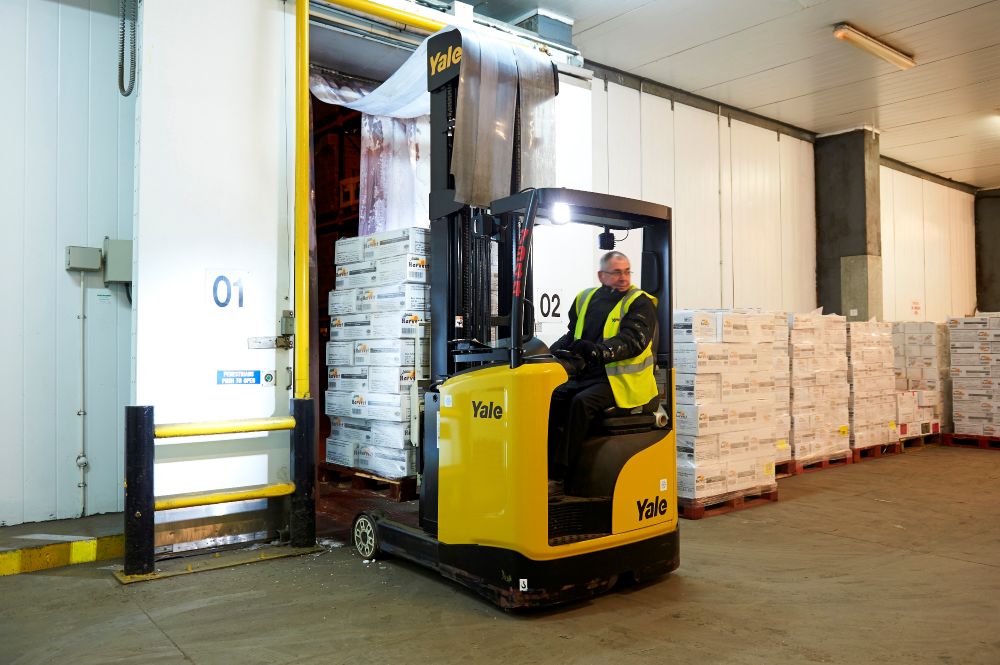
To tackle operational changes, many food processing facilities are looking past just individual equipment selection and fleet composition. Instead, exploring how integrated technologies can also play a valuable part in helping create connected, responsive, and efficient operations.
Solutions beyond lift trucks
Lift trucks, pallet trucks, and other warehouse equipment are often viewed as tools for transporting loads. In reality, they have the potential to generate valuable operational data.
For food processing sites, a delay in moving ingredients to production lines, inefficiencies in cold stores, or product damage during handling can have consequences far beyond warehouse efficiency. They can affect product quality, lead to waste, impact customer service, and increase operating costs.
A more holistic approach, combining lift trucks with technologies such as telemetry, operator assistance technology, advanced battery solutions, and application-specific engineering, may help provide more precise visibility into operations and empower managers to make more informed and data-led decisions.
The cold store challenge
Few materials handling environments are as severe as cold storage. Equipment reliability becomes particularly important, as unplanned downtime can have a direct impact on efficiency and operational continuity. This is where integrated technologies can add value.
For example, telemetry systems can provide insight into truck utilisation, helping managers identify underused assets, monitor operating patterns, and support proactive maintenance planning. Similarly, operator assistance technologies like lights and sensors can support drivers working in challenging visibility conditions or busy storage areas.
Data-driven decision making
Food processing facilities often operate multiple truck types across different applications. Better visibility into fleet activity assist managers to identify bottlenecks, improve equipment utilisation, support maintenance planning, and make more informed decisions about fleet investment.
Integrated telemetry solutions can monitor factors such as usage hours, impacts, idle time, and maintenance requirements. This information can be particularly valuable during periods of seasonal or fluctuating demand, allowing operations to optimise fleet deployment and potentially avoid unnecessary equipment costs. It is easy to assume “we need more trucks” but the data may reveal that the fleet is sufficient, and there is equipment spending large parts of a shift idle.
Just as importantly, operational data helps food processing facilities make improvements based on facts, not guesswork. A supervisor might say that the cold store is causing excessive downtime. However, the data might show that most downtime stems from impacts and operator-related issues, not the environment itself.
Supporting operator performance
Busy environments, shift work, and demanding schedules can create challenges that affect consistency and efficiency. Operator assistance technologies may support performance by improving awareness of surrounding activity, encouraging consistent driving practices, and providing additional support in challenging work areas such as cold stores or congested warehouse zones if the specific application requires it.
As food processing businesses continue to focus on productivity, quality, waste reduction, and cost control, access to better operational insight is becoming increasingly important. By combining application-specific materials handling equipment with integrated technologies, operations may be better positioned to make informed decisions, optimise workflows, and build a more resilient future-ready operation.