Manufacturing Production Solutions

Schneider Electric appoints David Hall as Zone President UK & Ireland

  • Focus on spearheading strategic growth in the UK & Ireland as energy landscapes undergo rapid transformation
  • Strengthening UK&I’s industrial competitiveness through the deployment at scale of electrification, automation, and digitalisation solutions expertise
  • Well-equipped to make immediate impact, following nine years in Schneider leadership and with customer-first focus

 Schneider Electric, a global energy technology leader, today announced the appointment of David Hall as Zone President of the UK and Ireland (UK&I).

David will spearhead the strategic growth of the UK&I, a region that is pivotal to Schneider Electric’s ambitions in Europe. At a time when the UK and Irish energy landscapes are undergoing rapid transformation, Schneider brings strong expertise in a wide range of markets, electrifying, automating and digitalising industry to support competitiveness and resilience.

From grid modernisation to electrification, David will oversee the continued rollout of Schneider Electric’s robust solutions that drive operational efficiency and energy security across sectors. This includes the rollout of infrastructure needed to accommodate growing electricity demand across the UK&I.

David brings extensive knowledge and understanding of the UK&I business along with a customer-first approach to the role. Having worked at Schneider Electric for nine years, holding senior leadership positions across the business, he is well equipped to make an immediate impact. Most recently, David served as Senior Vice President for Industrial Automation Strategic Accounts, where he led efforts on Schneider Electric’s automation and control solutions globally. Prior to this, he led the UK&I Power Systems business, overseeing the implementation of cutting-edge technology in the shift to renewable generation, EVs, electric rail and shore-to-ship electric charging. He will report to Laurent Bataille, Executive Vice President of Europe Operations.

Commenting on the appointment, Laurent emphasised the significant growth opportunities in the Zone: “The UK and Ireland are both taking decisive steps towards a more sustainable future, electrifying, automating, digitalising and decarbonising their industries, buildings and power grids. The net zero economy in the UK alone could be worth £1 trillion by 2030 – spelling an enormous opportunity for growth, innovation and job creation to strengthen energy sovereignty and resilience across industries. Meanwhile, smarter investments in energy infrastructure and transport will significantly contribute to the effective implementation of Ireland’s National Development Plan, with billions of euros already allocated for strategic energy projects.

David’s strong customer focus, proven track record of growth, and deep market insight make him exceptionally well equipped to lead us into the next phase of our UK and Ireland journey as we continue to strengthen our position as the region’s trusted energy technology partner.”

David added: “This is a hugely exciting time for the UK and Ireland as the energy transition accelerates - and off the back of our recent multi-million pound investment into state-of-the-art operations such as our smart manufacturing plant in Scarborough. I am thrilled to lead a strong team as we deliver even greater impact for our customers and partners, helping them to realise the commercial benefits of decarbonisation.  

“Our commitment to supporting local economies and driving industrial competitiveness through sustainable progress remains paramount. I look forward to leading our continued growth, and it will be my priority to keep close step with the evolving direction of markets and customer demands.”

An electrical and electronics engineer, David brings a wealth of experience in renewable electricity generation, energy management and energy efficiency to the role. Before joining Schneider, David held senior leadership roles across energy and utility providers including ENGIE, SSE, E.ON, Severn Trent Water, AES and RWE npower.

David will be leading the company’s next phase of growth following Kelly Becker’s five-year tenure. Kelly and David will work closely together to ensure a seamless transition. “Kelly leaves a lasting legacy of transformational impact across the UK and Ireland and more widely across Europe, and we are deeply grateful,” said Laurent Bataille. Her next role at Schneider Electric will be announced separately.
Schneider Electric launches next-generation tower lights to drive safer operations

  • New Harmony range future proofs industrial signalling
  • Improves safety and reduces downtime through visual and audible alerts
  • Streamlines product selection and spare parts inventory


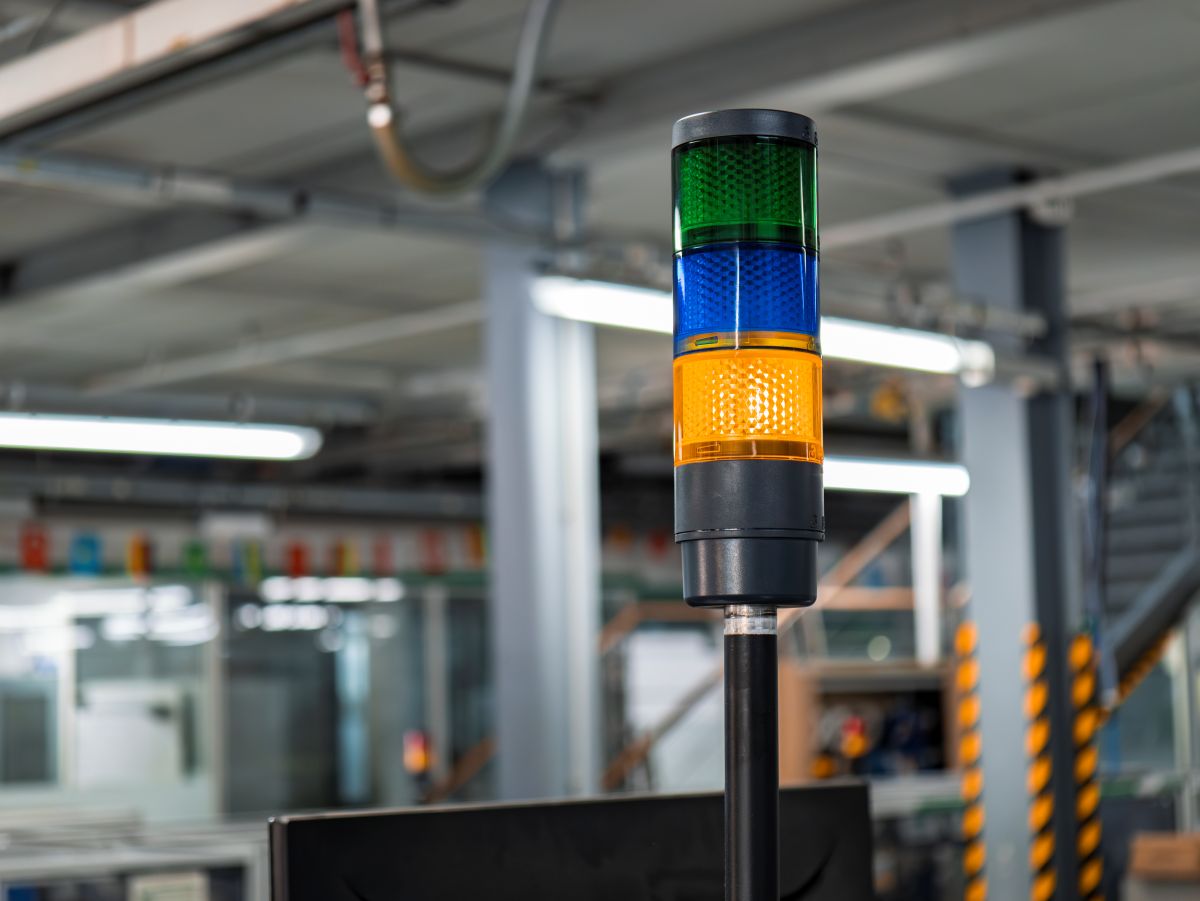
Schneider Electric, the global leader in digital transformation of energy management and automation, has unveiled the new range of Harmony Tower Lights, replacing legacy signalling products with a modular and future-ready portfolio.

The Harmony range represents a completely new line up of Tower Lights, with four core options. The optimum 70mm XVB7 is a modular tower light that comes in premium materials and design. The modular 60mm XV6 and 40mm XV4 offer a cost effective and modern solution, and the fully customisable smart XVTS features new light and audio configurations for advanced signalling.

The new range delivers value across several applications including water wastewater, mining, metals, food & beverage, automotive, healthcare, pharmaceuticals, retail, logistics, and manufacturing. The modular XVB7, XV6 and XV4 help standardise signalling, simplify maintenance and reduce spare parts complexity. For more advanced requirements, the XVTS extends the range with programmable visual and audible signalling and connected options to help teams respond quickly to changing conditions. These solutions will help OEMs, panel builders, distributors, and end users improve safety, minimise downtime in high-throughput systems, and lower warehousing costs.


Claire Jones, Product Marketing Manager, Schneider Electric
“Unplanned downtime is a major productivity drain for any sector. According to the 2025 State of Industrial Maintenance Report only 20% of facilities saw downtime costs fall in the last year and 31% saw them rise. Underlying causes of this downtime such as equipment or process malfunctions can be addressed through better real-time visibility. The new Harmony range enables instant, customisable alerts allowing operators and maintenance teams to act in real-time before failures impact production. Ultimately, we want tower lights to make industrial environments more resilient, connected, and efficient, for all members of the supply chain whether it is one line at a time, or entire facilities.”

Key features:

  • High-performance LED signalling delivering high visibility with low power consumption with up to 50,000 hours operating life.
  • Modular stack design (XVB7, XV6 and XV4). Configure the tower you need and replace individual light or sound modules.
  • Visual and audible configurations across the range, including optional buzzer and sound variants for clearer notification.
  • Flexible installation and connectivity with multiple mounting and wiring options, including push-in terminals, with IO-Link/USB options on selected models.

Key benefits:

  • Reduce unplanned downtime by helping teams identify machine status and abnormal conditions faster, improving response times across assets.
  • Support safer working practices through clearer, high-visibility alerts that improve hazard awareness on the plant floor.
  • Simplify maintenance and spares (XVB7, XV6, XV4) by swapping modules rather than replacing complete assemblies, reducing inventory complexity.
  • Improve operational consistency by standardising signalling across machines and lines to support quicker, more confident decisions.


A new tower light has been introduced at the top of the new range to enhance asset monitoring and safety. The Harmony XVTS is a smart programmable unit that extends tower light functionality to provide time-based and volume-level visual indications as well as simple alerts. It offers 9 or 15 individual light segments that can be fully customised within the full RGB spectrum and specific light patterns (steady, blinking, flashing, double and triple flashing and rotating). The XVTS is certified to IP69K rating, the highest level of Ingress Protection (IP) available. This means it is the perfect solution for outdoor or extreme applications and has excellent resistance to shock and vibration.


Trusted for over two decades, Harmony Tower Lights are designed to help OEMs, panel builders, distributors, and end users unlock instant visualisation in a wide range of settings. Fully customisable smart tower lights, that even come with their own software, can fit any mission-critical purpose. Modular solutions deliver ease-of-use and seamless integration and mounting to drive down unplanned downtime in any industrial environment.

Explore the Harmony Tower Lights range.


Seco® High Feed SP07 reduces inventories and maximizes productivity

Capable of handling a wide mix of materials, Seco® High Feed SP07 excels in all machining strategies and allows you to push productivity levels, particularly on complex components. A positive cutting rake angle ensures optimal chip formation, while the stable insert design and constant lead angle deliver predictable cutting behavior, paramount for unmanned production. Reduce the need for skilled labor The SP07 addresses common industry challenges: frequent tool changes, unpredictable results, and high costs due to rapid wear. In one reliable solution, it simplifies tool management and reduces the need for skilled labor.

Digital traceability via Data Matrix codes further streamlines operations, making the SP07 ideal for high-volume and unmanned production. High metal removal rates in shallow depths of cut Each insert features four cutting edges, maximizing usage and extending tool life. Even with shallow depths of cut (≤0.8 mm), the SP07 maintains high metal removal rates, ensuring manufacturers stay on track with productivity goals. The result is a significant reduction in cost per part and improved operational efficiency. “Our customers need to boost productivity and cut costs.

Seco® High Feed SP07 delivers reliable, flexible performance across materials”, says Benoît Patriarca, Product Manager Copy High Feed Milling. “The four cutting edges and digital traceability simplify processes further, even when skilled labor is limited.” With its origins in Fagersta, Sweden and present in more than 75 countries, Seco is a leading global provider of metal cutting solutions for indexable milling, solid milling, turning, holemaking, threading and tooling systems. For nearly 100 years, Seco has driven excellence throughout the entire manufacturing journey, ensuring high-precision machining and high-quality output. For the latest innovations and cutting-edge products,

visit www.secotools.com

How Preventive Maintenance Reduces Downtime in Food & Beverage Production

In food and beverage manufacturing, downtime is far more than an inconvenience. When production stops, the consequences can include product waste, missed delivery deadlines, lost revenue and damage to brand reputation. With strict hygiene standards, tight margins and high-volume output, even small equipment failures can affect the entire operation.

Preventive maintenance offers a practical way to reduce unplanned stoppages, protect product quality and support sustainability goals. By maintaining equipment before faults occur, manufacturers can create a more reliable and efficient production environment, supported by digital tools such as ShireSystem.

The true cost of downtime
Unlike many sectors, downtime in food and beverage production can lead directly to product loss. If a filling line stops or refrigeration fails, batches of perishable goods can quickly become unusable. This creates financial loss and additional waste that must be disposed of safely.

Production delays can also disrupt supply chains. Supermarkets and distributors rely on consistent delivery schedules, and any interruption can result in penalties or strained relationships. There are compliance risks too. Equipment failures can interrupt cleaning cycles, temperature controls or quality checks, increasing the likelihood of failing audits or breaching safety standards.

Preventive maintenance helps reduce these risks by keeping machinery in optimal working condition.

What preventive maintenance looks like in practice
Preventive maintenance focuses on acting before problems occur. Tasks are scheduled based on time, usage or performance indicators rather than waiting for breakdowns.

In a food and beverage setting, this can include servicing mixers, conveyors and packaging lines, inspecting refrigeration systems, replacing worn components, calibrating monitoring equipment and planning sanitation procedures. Managing these activities in a structured way allows teams to plan around maintenance instead of reacting to failures.

Reducing waste and supporting sustainability
Well-maintained equipment runs more accurately and consistently, helping to reduce waste. Faulty machinery can cause inconsistent filling levels, damaged packaging or contamination risks, all of which lead to rejected products.

Regular maintenance helps keep production within specification, resulting in fewer rejected batches, less rework and better use of ingredients and materials. This protects 

margins while supporting environmental goals by reducing waste and energy consumption.

Improving safety, compliance and planning
Food safety is critical in this sector. Preventive maintenance helps ensure machinery remains clean, functional and compliant with regulatory requirements. Routine checks can identify worn seals, faulty sensors or temperature fluctuations before they affect product quality.

A documented maintenance history also supports audits by providing evidence that equipment is regularly inspected and maintained. Preventive maintenance also improves planning. Instead of reacting to breakdowns, teams can schedule work during quieter production periods or planned shutdowns, reducing disruption.

Building a more resilient operation
In a fast-paced production environment, reliability is essential. Preventive maintenance helps reduce downtime, minimise waste and protect product quality. Supported by structured processes and digital tools, it enables a shift from reactive firefighting to a more controlled approach, helping operations meet demand consistently and maintain high standards.

www.elecosoft.com


Subcategories

Share This

1 2 3 4 5 6 7 8 9 10 11 11