Manufacturing Production Solutions

LANTEK TO DEMONSTRATE LATEST GENERATION V45 SHEET METAL SOFTWARE AT MACH 2026

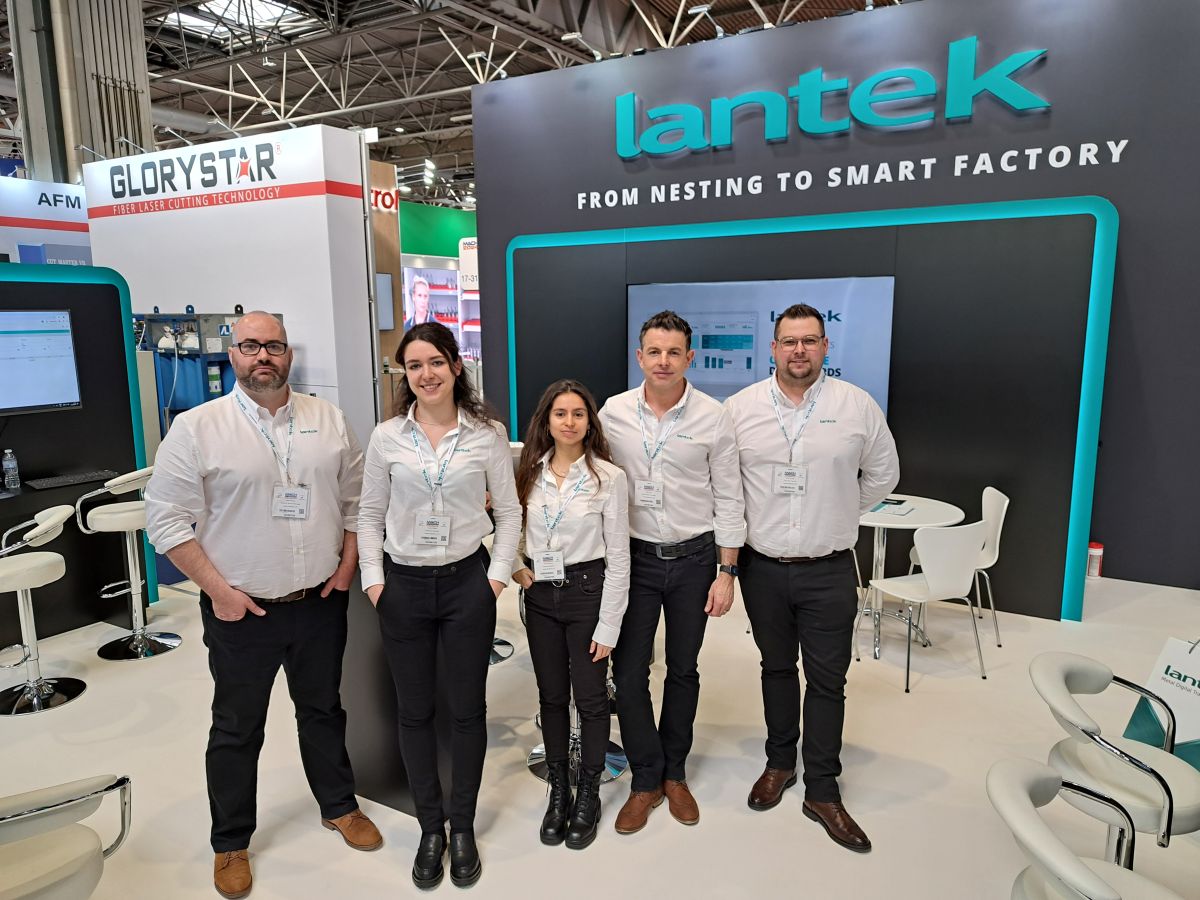
Lantek at trade show

Lantek, a global leader in software solutions for the sheet metal industry, is excited to be demonstrating its next generation v45 (Version 45) sheet metal software at MACH 2026, which signals the start of a new era in the way workshops operate.

The Lantek team will be at the show to discuss with attendees how the innovative new features of the v45 software will help sheet metal manufacturers to achieve higher efficiency, tighter process control and better connectivity.

Adam Ball, UK Commercial Director at Lantek, explains: “MACH is a great opportunity to showcase our new v45 software to the sheet metal industry.  Manufacturers are looking for software that helps them to work smarter, reduce errors and simplify production processes.  v45 offers even more advanced support to workshops - by strengthening integration and improving transparency, we’re enabling customers to achieve quicker deliveries, better margins and greater material optimisation.”

For the first time, the new version features AI (artificial intelligence) tools, with the introduction of KAI, Lantek’s brand new transversal digital assistant. Integrated across multiple applications, KAI supports technicians throughout their daily workflows by multiplying capabilities and radically simplifying processes. For users, this means a smarter companion that will save time, reduce effort and improve consistency, opening an exciting new path towards intelligent manufacturing.

Another major advance in v45 is Lantek MES, the company’s production management system. This incorporates a new generation of the Production Planning tool, providing greater transparency in delivery times and resource utilisation. With a modern full web interface, it gives managers clear visibility and precise control about the expected shopfloor performance and possible bottlenecks. The update also brings improvements in intermediate warehouse management and expanded machine connectivity, allowing virtually any type of workshop machine to be integrated into the system.

For users, this means more transparency, better predictability and greater responsiveness to changing demands.

Further enhancements to v45 from Lantek include updates to sheet metal programming tools Stackmaster and Lantek Expert, which extend compatibility with new lift devices and improves integration with other systems. These refinements in v45 help to reduce programming time and support more cost-effective production.

With v45, users can also benefit from advances in Assembly to Nesting (A2N) with better usability and improved unfolding accuracy. By leveraging bending tool data, manufacturers can move from 3D assembly to cutting more quickly and with fewer errors.

Adam Ball continues: “Each module has been enhanced to deliver tangible benefits, from better material utilisation and more precise planning to quicker job preparation and more connected workflows.  With v45, we are taking an important step towards the factory of the future: being smarter, more connected and centred on the needs of users.”

For more information on V45 software, visit: https://www.lantek.com/uk

How AI is rewriting the rules on the factory floor

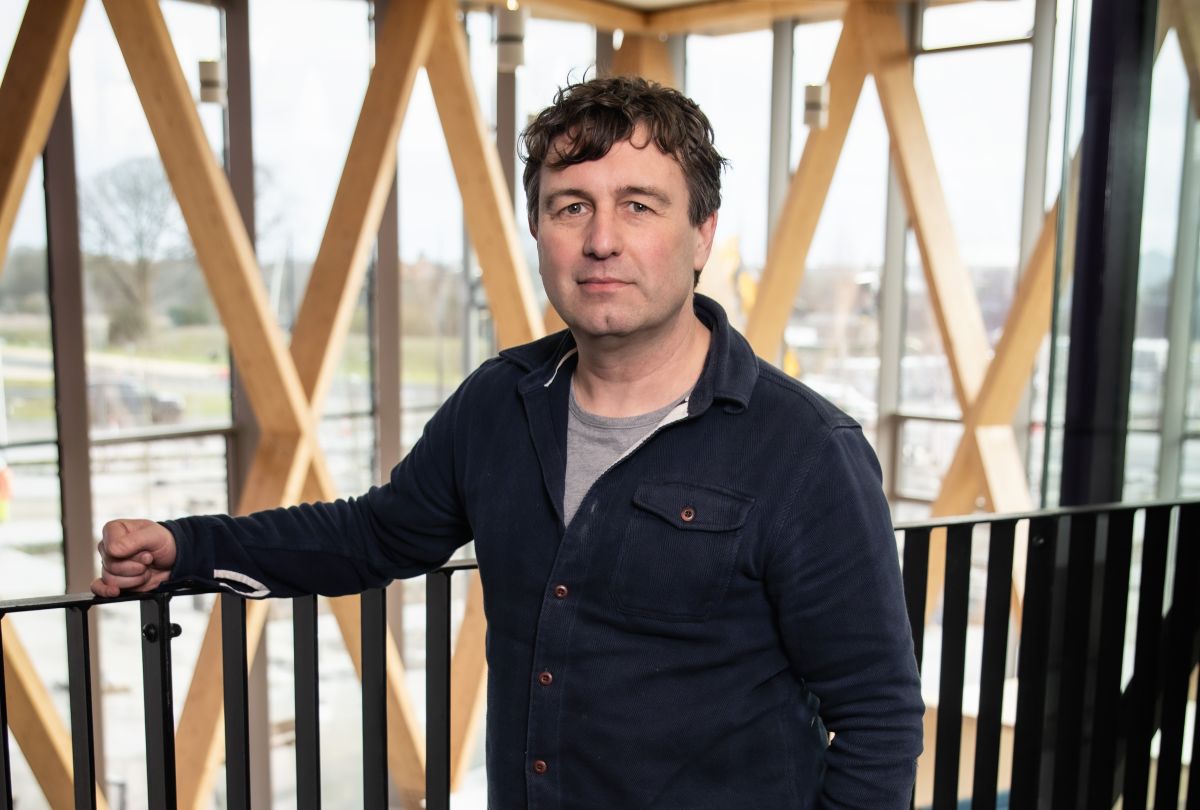
Andrew Sherlock, director of data-driven manufacturing, National Manufacturing Institute Scotland (NMIS)

Artificial intelligence (AI) is rapidly becoming a defining topic across the manufacturing sector. While much of the public debate focuses on large language models (LLMs), such as OpenAI’s ChatGPT, AI’s impact in industry extends far beyond its role as a digital assistant or content generator.

A new wave of sector-specific applications is beginning to emerge, shaping how manufacturers design processes, make decisions, and unlock value from the data running through their operations.

The shift comes at a time when production systems are becoming more complex, supply chains more demanding, and expectations around efficiency and quality higher than ever. Traditional tools are struggling to keep pace, prompting manufacturers to examine how AI can support activities that have long relied on intuition or manual monitoring.

Across the sector, projects are demonstrating how targeted AI models can improve accuracy, strengthen process control, and provide clearer visibility on the factory floor. As momentum builds, the question is no longer whether AI will influence manufacturing, but how deeply it will permeate engineering practice and what foundations are required to unlock its full potential.

Data access is central to that progress. At the National Manufacturing Institute Scotland, our researchers are developing new AI capabilities while also generating the datasets needed to make them viable in real-world settings. Even the most sophisticated software relies on robust training data – without it, its value quickly diminishes.

Practical examples are already emerging. NMIS is working with a major aerospace company to model how a component behaves during forging – a highly complex process in which some of the underlying physics are still not widely understood. By combining machine learning with targeted trials, the team is producing datasets that help predict changes in material properties, giving engineers the insight they need to design and optimise processes with greater precision – reducing the number of trials, cutting waste, and improving overall efficiency.

Innovation is also accelerating across the wider ecosystem, with more companies developing AI tools for design, simulation, and factory-level decision-making. One UK software developer, for example, is helping engineers extract value from Computer-Aided Design (CAD) data through its HOOPS AI platform – a framework that integrates access, preparation, and training of machine-learning models using 3D geometry.

Elsewhere, an emerging engineering platform is slashing traditional simulation times from days to seconds with AI-powered models trained on existing simulation data. Engineers can refine designs in real time, speeding up development and reducing reliance on lengthy physical or computer-based testing.

NMIS is also working with academic partners, including colleagues at the University of Strathclyde and researchers at the University of Edinburgh, to apply AI to factory operations. By capturing raw data streams from equipment such as forklifts, new algorithms can track parts, identify inefficiencies and bottlenecks, and highlight opportunities to improve flow and minimise downtime within production areas.

Despite the progress being made, AI adoption on the factory floor is still at an early stage. Through its Data-Driven Design and Manufacturing Colab project, part of the Glasgow City Region Innovation Accelerator programme and funded through Innovate UK on behalf of UK Research and Innovation, NMIS is working with organisations to bridge the gap between manufacturing and digital technologies, giving engineers the skills and confidence to apply data-driven methods within their own businesses. So far, more than 120 projects – spanning aerospace, energy, food and drink, construction, and electronics – have already demonstrated how data-led approaches can cut emissions, improve component accuracy, and enhance reliability.

AI is already influencing how manufacturers design processes and make decisions. As targeted tools continue to mature, the opportunity now lies in embedding them more deeply into engineering operations and ensuring the workforce has the capability to use them effectively. This shift – from broad debate to practical integration – is where AI will deliver its most tangible impact, helping manufacturers unlock greater resilience and value from the data that underpins modern production.


NMIS is operated by the University of Strathclyde and part of the High Value Manufacturing (HVM) Catapult.

Precision and automation in micro waterjet cutting

WatAJet an Italian excellence in micro waterjet cutting  has transformed an academia-developed technology into a unique production process. Thanks to Mitutoyo's Quick Vision Apex, the company has revolutionised its quality control, taking precision, automation and reliability to the next level.

Specialising in micro waterjet cutting, WatAJet is one of the finest examples of Italian manufacturing excellence; it stands out for its ability to combine cutting-edge technology and extreme precision, while processing materials that would otherwise be impossible to handle without compromising quality.

Founded as a spin-off of the Politecnico di Milano, the company has been able to transform an academia-developed technology into a distinctive industrial competence. WatAJet is presently the only company in Italy and one of the very few in Europe to use this revolutionary cutting technology on a production scale.

“Given the very tight tolerances we are used to working with, compromises are not acceptable,” says Francesco Arleo, Head of R&D at WatAJet. “We needed a tool that was precise, flexible and reliable over time. Mitutoyo's Quick Vision Apex was a real game changer.”

WatAJet operates in a specialised production niche. With water jets measuring 0.2 mm in diameter, high pressures and ultra-fine abrasives, the company is able to cut extremely hard or extremely delicate materials without altering them.

Special steels, titanium, ceramics, multilayer composite materials, engineering plastics and glass are just some of the materials that WatAJet can process, guaranteeing exceptionally tight tolerances on even very small parts.

Sectors such as biomedical, aerospace and scientific research require faultless components, as the slightest imperfection can compromise the entire product.

Micro waterjet cutting is a unique technology. Unlike laser or electroerosion, it does not thermally alter the material and allows any surface to be processed, even composites or layered materials with different mechanical characteristics.

“We cut materials that are impossible for others,” explains Mr. Arleo. “In some cases, a tolerance of two microns is required on thicknesses of half a millimetre. And everything must be repeatable.”

Each component requires care not only in terms of dimensions but also aesthetics, because many parts intended for biomedical use must be flawless both technically and visually.

It is not only a technical challenge, but also a manufacturing one. An increasing number of customers wish for WatAJet to provide full control of the parts, a request that would traditionally involve hours of manual work or the use of multiple measuring instruments.

For a company that works with high-precision microcomponents, it could have been a significant limitation, which has, however, been overcome thanks to the introduction of Mitutoyo's Quick Vision Apex.

Mitutoyo's machine has revolutionised quality control management. The main advantage is the ability to combine three technologies in a single system.

High-resolution optical vision allows two-dimensional components and micro-profiles to be measured; the contact probe allows three-dimensional elements or cylindrical surfaces to be measured; the laser acquires profiles and height measurements with extremely high precision.

All within a single, fully programmable cycle, just like a numerically controlled machine tool.

“With three technologies in a single machine, we can measure any part that comes out of production,” explains Mr. Arleo. “If we hadn't chosen the Quick Vision Apex, we would have had to purchase three different instruments. Here, everything is integrated and can be automated.”

The ability to program complete measurement cycles and let the machine operate autonomously has allowed WatAJet to manage even very large batches while maintaining consistent precision and ensuring full data traceability.

Every day, Quick Vision Apex starts up at the beginning of the shift and works for hours without interruption.

It is no longer just a measuring tool: it has become an integral part of the production flow.

Automatically generated reports, structured management of measurement cycles, and the ability to repeat complex checks without errors make metrology an ally of production, rather than a separate and potentially critical step.

This level of automation has enabled WatAJet to satisfy customers with stringent requirements, comply with complex control plans, and focus on its technological growth by reducing repetitive manual tasks.

Quick Vision Apex has also paved the way for machining and checks that were once very difficult to manage.

Particularly complex three-dimensional components, deep micro-holes, intricate profiles on extremely hard materials: everything can be measured with precision and repeatability.

“It has become a production machine, not just a measuring tool,” emphasises Mr. Arleo. “Program it once, it does the rest. And it is always accurate.”

For a company like WatAJet, where quality is central to its offering, such reliability is an indispensable asset.

Reliability is a recurring theme when Mr. Arleo talks about Mitutoyo.

Even manual instruments calipers, micrometers and small tools  are part of everyday life at the company and help to consolidate its reputation for precision.

“A cheap caliper may cost less, but after six months it is no longer able to measure accurately. Mitutoyo's small tools last for years, and the measurement is always reliable,” he says.

Consistent performance thus becomes a strategic element for a company operating in regulated sectors, where error is not tolerated.

However, the collaboration with Mitutoyo is not limited to technology.

It is also a matter of human relations, listening and mutual trust.

“The added value is knowing that if you call, there is always someone ready to help you. That's what we look for in a technology partner,” explains Mr. Arleo.

The relationship between WatAJet and Mitutoyo is a partnership built over time, based on constant availability and support, which is essential for a company that works on extremely complex components.

Thanks to Quick Vision Apex, WatAJet is now able to guarantee 100% dimensional checks even on complex batches, to significantly reduce measurement times, to increase process repeatability and tackle difficult parts with the confidence of a system that never fails.

The machine has made it possible to scale up production without compromising quality, allowing the company to grow while remaining focused on high value-added machining.

“Mitutoyo is not just a supplier to us. It is a cornerstone,” says Mr. Arleo.

And Quick Vision Apex is not just a machine that measures parts: it is the tool that allows WatAJet to transform precision, reliability and automation into a real competitive advantage.

“Every day, we know that it will do exactly what it is supposed to do, with no surprises,” concludes Mr. Arleo. “And that's what allows us to maintain the highest standards without slowing down production.”

Mitutoyo Europe GmbH


Schneider Electric appoints David Hall as Zone President UK & Ireland

  • Focus on spearheading strategic growth in the UK & Ireland as energy landscapes undergo rapid transformation
  • Strengthening UK&I’s industrial competitiveness through the deployment at scale of electrification, automation, and digitalisation solutions expertise
  • Well-equipped to make immediate impact, following nine years in Schneider leadership and with customer-first focus

 Schneider Electric, a global energy technology leader, today announced the appointment of David Hall as Zone President of the UK and Ireland (UK&I).

David will spearhead the strategic growth of the UK&I, a region that is pivotal to Schneider Electric’s ambitions in Europe. At a time when the UK and Irish energy landscapes are undergoing rapid transformation, Schneider brings strong expertise in a wide range of markets, electrifying, automating and digitalising industry to support competitiveness and resilience.

From grid modernisation to electrification, David will oversee the continued rollout of Schneider Electric’s robust solutions that drive operational efficiency and energy security across sectors. This includes the rollout of infrastructure needed to accommodate growing electricity demand across the UK&I.

David brings extensive knowledge and understanding of the UK&I business along with a customer-first approach to the role. Having worked at Schneider Electric for nine years, holding senior leadership positions across the business, he is well equipped to make an immediate impact. Most recently, David served as Senior Vice President for Industrial Automation Strategic Accounts, where he led efforts on Schneider Electric’s automation and control solutions globally. Prior to this, he led the UK&I Power Systems business, overseeing the implementation of cutting-edge technology in the shift to renewable generation, EVs, electric rail and shore-to-ship electric charging. He will report to Laurent Bataille, Executive Vice President of Europe Operations.

Commenting on the appointment, Laurent emphasised the significant growth opportunities in the Zone: “The UK and Ireland are both taking decisive steps towards a more sustainable future, electrifying, automating, digitalising and decarbonising their industries, buildings and power grids. The net zero economy in the UK alone could be worth £1 trillion by 2030 – spelling an enormous opportunity for growth, innovation and job creation to strengthen energy sovereignty and resilience across industries. Meanwhile, smarter investments in energy infrastructure and transport will significantly contribute to the effective implementation of Ireland’s National Development Plan, with billions of euros already allocated for strategic energy projects.

David’s strong customer focus, proven track record of growth, and deep market insight make him exceptionally well equipped to lead us into the next phase of our UK and Ireland journey as we continue to strengthen our position as the region’s trusted energy technology partner.”

David added: “This is a hugely exciting time for the UK and Ireland as the energy transition accelerates - and off the back of our recent multi-million pound investment into state-of-the-art operations such as our smart manufacturing plant in Scarborough. I am thrilled to lead a strong team as we deliver even greater impact for our customers and partners, helping them to realise the commercial benefits of decarbonisation.  

“Our commitment to supporting local economies and driving industrial competitiveness through sustainable progress remains paramount. I look forward to leading our continued growth, and it will be my priority to keep close step with the evolving direction of markets and customer demands.”

An electrical and electronics engineer, David brings a wealth of experience in renewable electricity generation, energy management and energy efficiency to the role. Before joining Schneider, David held senior leadership roles across energy and utility providers including ENGIE, SSE, E.ON, Severn Trent Water, AES and RWE npower.

David will be leading the company’s next phase of growth following Kelly Becker’s five-year tenure. Kelly and David will work closely together to ensure a seamless transition. “Kelly leaves a lasting legacy of transformational impact across the UK and Ireland and more widely across Europe, and we are deeply grateful,” said Laurent Bataille. Her next role at Schneider Electric will be announced separately.

Subcategories

Share This

1 2 3 4 5 6 7 8 9 10 11 11