Manufacturing Production Solutions

Satron’s Precision Turbidity Measurement is Transforming CIP Washline Efficiency

CIP image 2

In an era of soaring energy costs and stringent environmental regulations, the dairy sector is under pressure to de-carbonise. We explore how moving from time-based flushing to optical phase detection can significantly bolster the bottom line.

In the dairy industry, hygiene is non-negotiable. However, maintaining the highest food safety standards frequently comes at a significant environmental and operational cost. Clean-in-Place (CIP) processes are notoriously resource-intensive, often accounting for a large portion of a site’s water, energy, and chemical consumption.

For Sustainability Managers and Production Directors alike, the challenge is clear: how can you meet ambitious Net Zero targets without compromising product integrity or plant throughput? The answer lies in moving away from conservative estimates and embracing high-precision process transparency.

The Hidden Cost of Traditional CIP

Many legacy CIP systems still rely on simple time-based washing or basic conductivity measurements to trigger phase transitions. By its very nature, this approach is overly cautious. To guarantee that no cleaning chemicals or product residues remain in the pipework, systems are typically programmed to ‘over-flush’.

The result is a costly drain on resources. Every day, thousands of litres of clean water, valuable dairy product, and expensive detergents are sent straight to the effluent plant. This doesn’t just inflate raw material and utility bills; it also significantly increases wastewater treatment charges, a growing concern for UK operators facing tighter discharge consents. To truly optimise the process, plants must transition from guesswork to exact measurement.

Precision via Optical Turbidity

To minimise waste, operators need to know exactly what is flowing through the process line at any given millisecond. This is where the Satron VO turbidity sensor provides a critical competitive advantage.

Utilising advanced optical measurement technology, the Satron VO delivers accurate, real-time data on the liquid’s composition. Rather than relying on a timer to ‘guess’ when a rinse is complete, the sensor identifies the exact cut-points between product, water, and cleaning agents. By measuring turbidity, the sensor detects even the slightest change in concentration, allowing the automation system to switch valves at the precise optimal moment.


Satron VO highlights

Driving ROI and Sustainability

Implementing precise optical measurement transforms CIP from a rigid, wasteful procedure into a highly optimised, data-driven process. These improvements directly impact a plant’s Key Performance Indicators (KPIs):

  • Minimised Water Consumption: By halting the rinse cycle the moment the water runs clear, dairies can eliminate unnecessary flushing, saving millions of litres of fresh water annually.
  • Reduced Chemical Expenditure: Accurate cut-points ensure that expensive detergents are recovered and reused rather than lost to the drain. This lowers procurement costs and reduces the chemical load on the local water authority’s infrastructure.
  • Thermal Energy Savings: Heating water and chemicals for CIP cycles requires massive amounts of energy. By reducing the total volume of fluids used, the energy required for heating drops proportionally—a vital saving given current UK energy prices.
  • Maximised Product Yield: Precision phase detection prevents valuable milk or cream from being accidentally flushed away during the initial pre-rinse phase, ensuring more product reaches the bottle or carton.

Maintenance Without Downtime: The PASVE® Advantage

Operational efficiency isn't just about the process; it’s about uptime. The Satron VO sensor can be seamlessly paired with the PASVE® mounting and service valve. This strategic combination allows sensors to be safely isolated, removed, cleaned, or calibrated without the need to stop the process or drain the line.

This ‘hot-swappable’ capability ensures continuous operational availability while significantly improving health and safety for maintenance personnel, as they are not exposed to hot or caustic process fluids during sensor servicing.

Conclusion: Achieve More by Wasting Less

Achieving sustainability in the Food & Beverage sector does not require a trade-off with hygiene or efficiency. By upgrading to Satron VO turbidity sensors, UK dairies can rely on exact calculations to drive immediate ROI, reduce their environmental footprint, and future-proof their production lines against rising costs.

It is time to look closer at your CIP cycles. The opportunity for significant savings is already flowing through your pipes.


If you are not attending the Food & Beverage Engineeering exhibition at Derby Arena on the 16th June, then call PLUS Automation on 0121 58 222 58 or email This email address is being protected from spambots. You need JavaScript enabled to view it. and we will bring a unit to show you. PLUS Automation helps engineers #MakeSenseofSensors and #MakeSenseofSafety using Inductive, Machine Safety, Photoelectric, Pressure, Process, RFID & Ultrasonic sensors from Contrinex, ReeR Safety & Satron.

Hydroscand transforms complex product data into a precise digital product experience

Global hydraulic and industrial hose solutions leader replaces static catalogues with a single, intelligent source of digital product truth

Hydroscand today announced it has implemented Akeneo Digital Showroom to transform how it manages and distributes complex product information across its global markets.

Hydroscand is a leading provider of hydraulic and industrial hose solutions with a strong local presence supported by global expertise managing a catalogue of more than 30000 products. To minimize customer downtime in 20+ countries the requirement for accurate product information is critical.

Previously, product information was distributed across catalogues, PDFs and an eCommerce site, while service technicians in the field often relied on printed materials that were not always fully up to date. The approach created challenges around data accuracy, maintenance and speed when launching new products or updating technical specifications.

Hydroscand implemented Akeneo’s Product Cloud to centralise product information and create a single version of the truth across all channels. As part of the project, Hydroscand worked closely with Akeneo on the development of its Digital Showroom solution, designed to make complex product discovery faster and more precise for sales teams, distributors and customers.

“Hydroscand’s products are technically complex, which means precision is absolutely critical,” said Linda Löfstedt Karlsson, Head of Product Information and System Owner for Akeneo at Hydroscand. “When a distributor, engineer or technician wants to find a product, they must be confident they have found exactly the right product. By working with Akeneo to build our Digital Showroom, we have created a platform where finding the correct product is now faster, easier and significantly more precise.”

Using Digital Showroom, Hydroscand now manages all product information centrally, ensuring that product management, marketing and sales teams are working from the same dataset.

The system supports collaboration across internal teams and simplifies the process of enriching product information, managing translations and distributing consistent data across digital channels and partner ecosystems.

“Our collaboration with Akeneo has been a perfect journey,” continued Karlsson. “The team has been incredibly open-minded when it comes to feedback and very fast to respond. That co-creation process meant we were able to build exactly what we needed rather than trying to force our processes into a rigid system.”

The transformation also marks the end of Hydroscand’s reliance on printed catalogues. With product information now centrally managed and continuously updated, the company plans to phase out catalogue production entirely, a move that will significantly reduce production time, costs and environmental impact while ensuring customers always access the most current information.

Hydroscand is also developing a mobile application to support technicians working in the field, enabling them to access accurate product information wherever they are.

“Industrial companies are under growing pressure to deliver the same level of product discovery and accuracy that customers expect in consumer eCommerce,” said Romain Fouache, CEO of Akeneo. “The way Hydroscand is using Akeneo Digital Showroom shows how powerful that transformation can be when complex product data is properly structured and managed. With Akeneo as a single source of product truth, Hydroscand can provide faster search, consistent information across channels and a much stronger experience for distributors, technicians and customers worldwide.”

“In the future we expect search to feel more like working with a knowledgeable colleague,” said Karlsson. “AI will help us guide users more intelligently through complex product choices, making it even easier to find exactly what they need.”

www.akeneo.com

Industrial label printing unplugged

label_1.jpeg

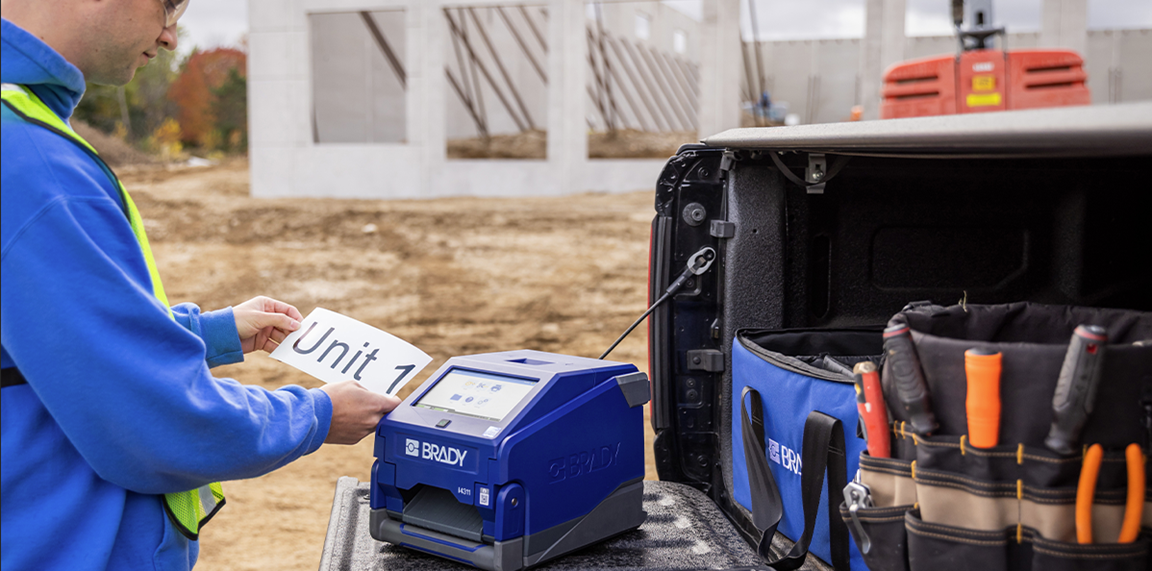
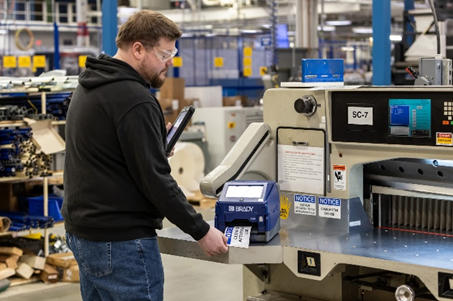
Print everything you need, where you need it! With the first transportable printer to deliver 101.60 mm wide labelling without cords or limits. Automated identification and data capture specialist Brady Corporation launches a new type of hybrid label printer that offers industrial label printing performance in a cordless, portable design.

Larger labels

Brady´s new BradyPrinter i4311 is designed to bridge the gap between stationary benchtop label printer power and mobile flexibility. A well-known limitation for most mobile label printers is the maximum width of the label. Brady´s i4311 marks the new maximum label width at 101.60 mm for connected label printing systems that retain true portability.

The larger print width brings a lot more applications into the mobile label printing range, including perforated work-in-progress tags, common size rating plates and larger cable tags, wraps, sleeves, asset labels, component labels and GHS-compliant chemical labels.

chemical.jpeg

Cut the cord

No need to look for power outlets with the i4311. The printer is powered by a battery that can handle 5000 large labels on a single charge. Swapping batteries has been made easy and they can be charged in 3.5 hours.

Easy to integrate

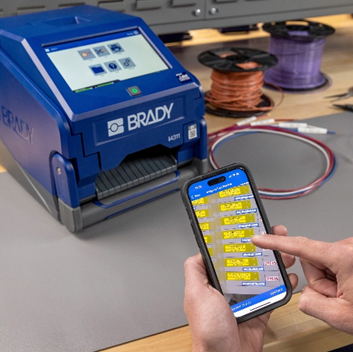
The new BradyPrinter i4311 can print labels from phones, tablets and laptops, and even from central company systems using Brady´s software development kit or ZPL support. In addition to Wi-Fi and Bluetooth connectivity, the i4311 also features ethernet and USB-C connections. 

The printer´s on-board 7´´ (17.78 cm) touch screen offers both on-device support as well as the capability to print labels directly from the printer. Users can store on average different 85 000 label templates in the printer that can be completed with an on-board ´fill in´ option, fully responsive to your touch.

Industry feedback

Brady also revealed i4311 printer features that were developed with close involvement from the company´s long-standing customers. As a result, the printer´s footprint was limited to 23 x 23 x 33 cm and 5.9 kg and the device´s easy-to-grip handle was optimised.

A battery-saver was also added for when the printer is not in use and battery-swapping was made even easier.

easier.jpeg

Portable benchtop

Right in the middle of Brady´s mobile label printer and industrial benchtop label printer line ups now sits the BradyPrinter i4311: a portable printer with the company´s benchtop industrial printing capabilities.

Compatible with more than 1300 Brady label parts, the i4311 can print on a majority of Brady´s reliable, laboratory-tested label materials. Just like other Brady printers the i4311 includes LabelSense technology to automatically set label material burn, size and pre-print settings as soon as a label roll is loaded.

The company´s newest label printer also works with a host of free Brady Express Labels mobile apps. These enable users to select text in an image file for example, and import it for printing on a label. Or to read barcodes with a phone and send them to the printer. With a commanding voice, labels can even be printed completely hands-free, using BradyVoice, a smartphone microphone and the BradyPrinter i4311.

41.jpeg

Watch the printer in action & learn more >>

Grinding Hub Everything under one roof: how integrated superfinishing enhances process reliability

Industrial superfinishing is defined by a wide range of highly specialized processes – from grinding and honing to superfinishing, lapping, and polishing. With sister companies such as Nagel Technologies, Gehring Technologies, Gehring Diato, KADIA, FLP Microfinishing, O.ERRE.PI. and ELGAN, the Nagel Group brings together this full spectrum of technologies in a uniquely comprehensive portfolio.

In theory, this setup enables seamless coverage of the entire superfinishing value chain – from grinding and honing to superfinishing, lapping, and polishing. Tooling plays a pivotal role: companies such as Gehring Diato and ELGAN develop cutting and abrasive tools based on diamond, CBN, or ceramic materials, each tailored to the specific technology and machining task. The portfolio ranges from grinding wheels for machining hard-coated brake discs to advanced cutting materials designed to generate friction-optimized surfaces.

One roof, many technologies – and the freedom to choose the best solution

The real strength of the Nagel Group, however, lies not only in its technological breadth, but in the structured interaction between its sister companies. Machines, tools, process expertise, and component know-how remain integrated within a single system. For users working with sensitive components – in industries such as automotive, hydraulics, defense, e-mobility, and aerospace – this translates into shorter coordination paths, significantly reduced project complexity, and clear overall responsibility for the machining result, even across multiple technologies.

Process integration in practice: how users benefit from end-to-end solutions

How this technological breadth translates into real-world applications becomes particularly evident in implemented projects across various industries. What matters is not the individual technology, but the targeted combination aligned with specific component requirements. 

A case from the aerospace sector illustrates this approach: an international airline group relocated the maintenance of selected axial piston pumps into its own production. The technical focus was on machining function-critical components, particularly the interaction between raceways and pistons. The solution was realized through the coordinated interplay of honing technology from KADIA and superfinishing processes from Nagel Technologies. By directly linking both processes, a stable and reproducible surface quality was achieved – without additional interfaces.

A comparable approach can be seen in the automotive sector at a leading manufacturer of automatic transmissions. Here, too, the process chain is based on the combination of KADIA honing and Nagel superfinishing. In addition to the precise alignment of machining steps, peripheral systems such as cooling and filtration technology were jointly utilized. This integrated process design enabled cost-efficient series production while meeting demanding requirements in terms of dimensional accuracy and surface functionality.

In the bearing industry, the breadth of the portfolio becomes particularly evident. Grinding processes from O.ERRE.PI. are combined with superfinishing technologies from Nagel Technologies to ensure reliable machining of critical components such as inner and outer rings. Additional process steps can be integrated within the group, enabling the mapping of nearly the entire mechanical process chain for bearing production.

Across all examples, one key insight emerges: technical performance is not the result of isolated processes, but of their intelligent integration – precisely aligned with the component, its function, and the production environment.

Technology Diversity as a Modular System for Precision Process Solutions

How this technological breadth translates into high-performance process solutions becomes evident at the machine level—and, above all, in the interaction of individual technologies:

FLP Microfinishing GmbH demonstrates at the GrindingHub, with its new HE series—particularly the HE540—how multiple superfinishing processes can be integrated into a single machine. Fine grinding, lapping, and polishing are combined within a compact architecture specifically designed for thin-walled and geometrically demanding workpieces. By linking planetary processing systems with fine grinding technology, an exceptionally uniform material removal is achieved alongside superior surface quality. 

For users, the decisive factor is not only precision but process stability: multiple machining steps can be realized within minimal space, without additional interfaces or part transfers. At the same time, the machine is fully geared toward connected production. End-to-end interfaces enable the acquisition and integration of process data across the entire machining chain. Combined with data-driven and AI-supported analytics, this creates a self-learning system that not only monitors processes but continuously optimizes them—a clear advantage for high-volume manufacturers with stringent requirements for transparency and reproducibility.

In the field of honing, Gehring Technologies presents the Deephone 2000, a horizontal honing machine designed for internal diameters ranging from 20 to 600 mm. The combination of internal cooling supplied directly to the point of engagement and in-process measurement—supported by a specially adapted control system (GHC – Gehring Honing Control)—ensures thermally stable machining with continuous process monitoring.

For large, repeatable production volumes, the adapter rod can optionally be equipped with an air supply system. In interaction with the tool, this enables continuous measurement via air back-pressure sensing, with real-time comparison against the honing control system and immediate corrective action where necessary. The key differentiator lies in the closed control loop: tool, machine, metrology, and digital analytics are seamlessly interconnected so that deviations are not only detected but instantly compensated. For users, this results in significantly reduced process variation and greater planning reliability in series production.

KADIA Produktion GmbH + Co. KG complements this spectrum with the second generation of the E line. This ultra-compact precision honing machine targets applications requiring economically efficient high-performance honing. At its core is the LH2x honing spindle with three direct drives, whose high rigidity enables both powerful and highly precise machining.

In combination with the HMC100 measurement and control technology, a fully regulated process is achieved, including continuous bore scanning. With up to 500 measurement values per millimeter, form deviations can be detected and compensated immediately. For users, this means high dimensional and geometrical accuracy alongside reduced cycle times and minimal tool wear. Expanded workspaces, integrated coolant systems, and optional additional processes such as deburring further enhance operational flexibility. 

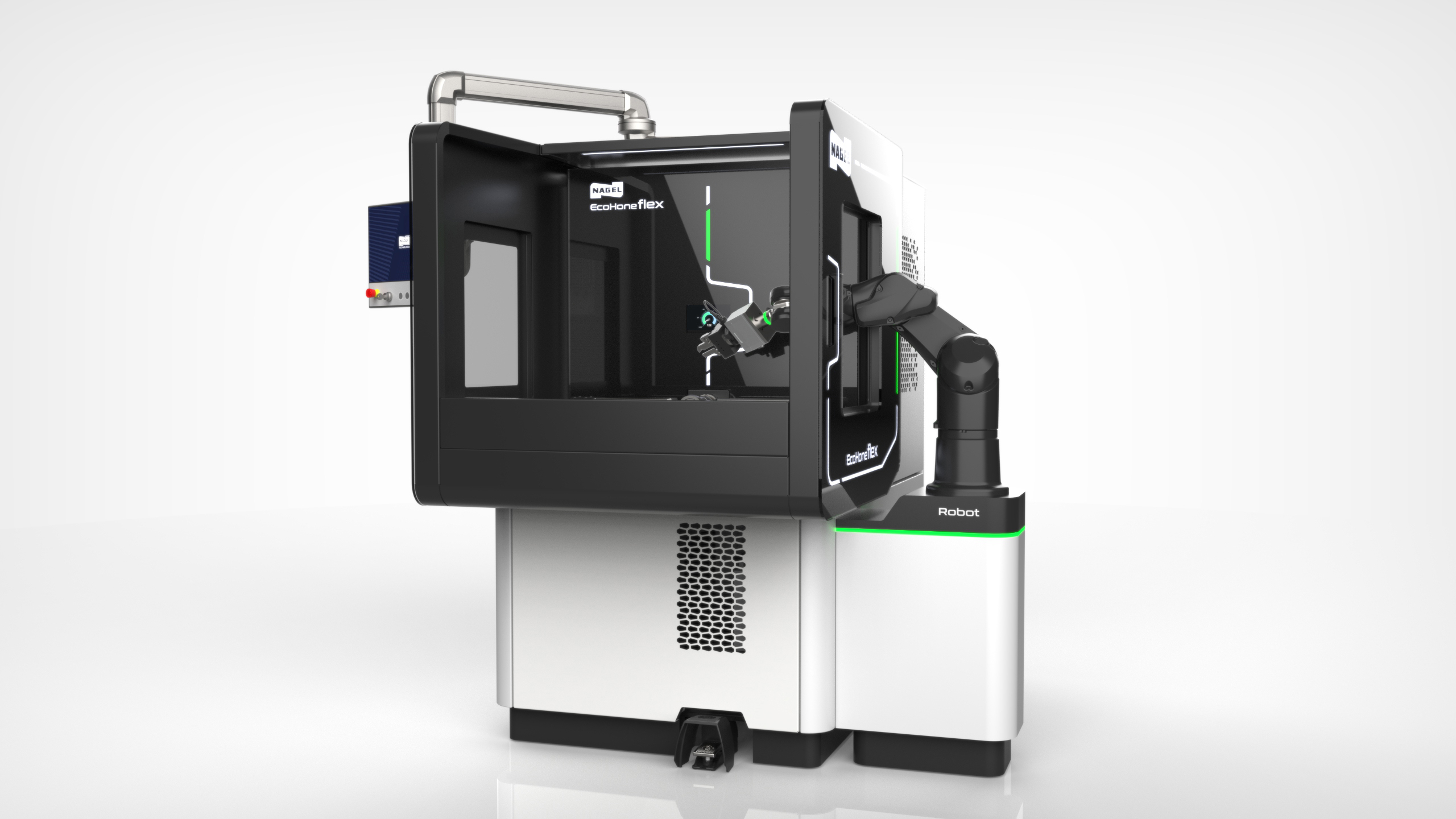
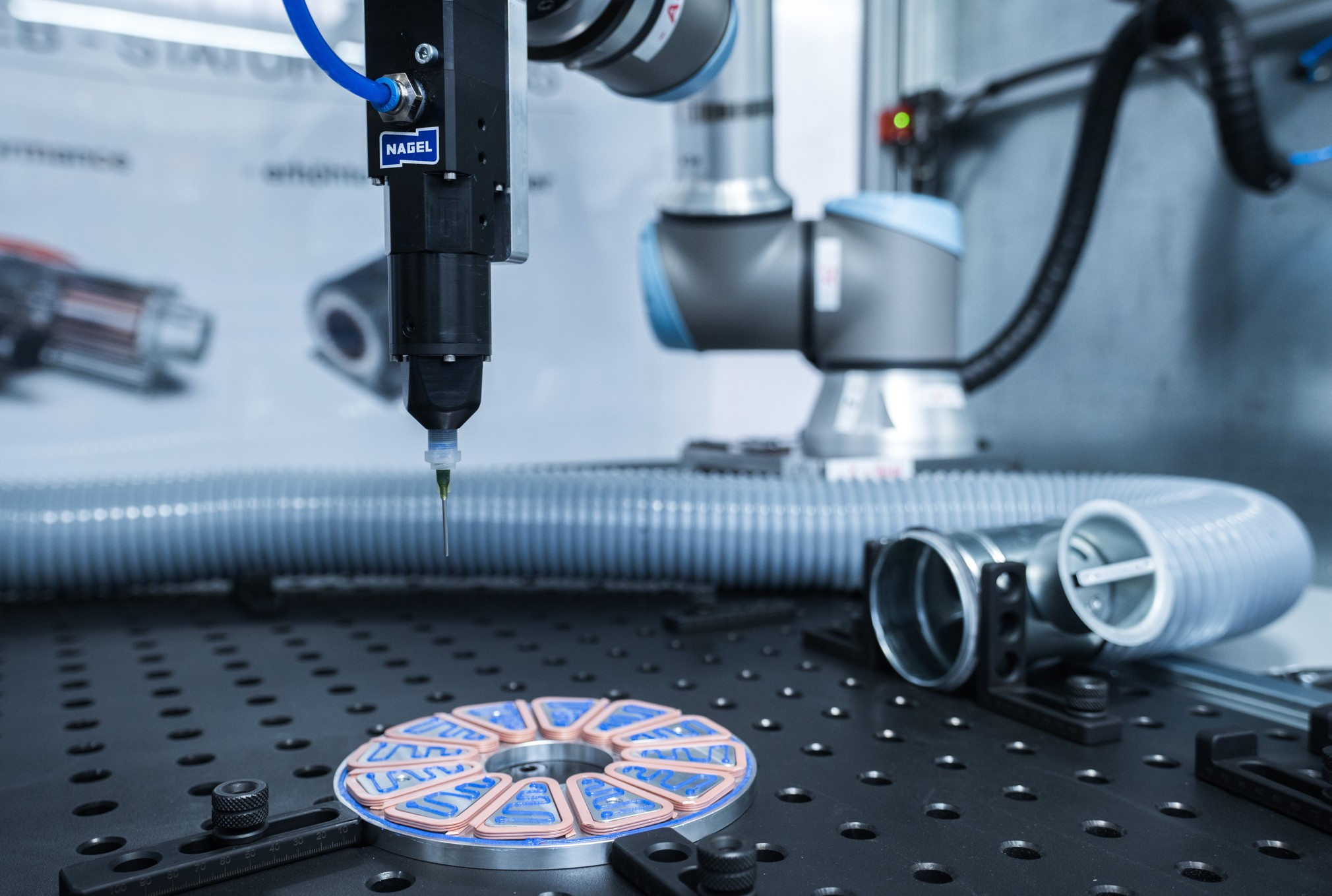
With solutions such as EcoHone flex, EASYHONE VRX, and the NaShaft Eco superfinishing platform, Nagel Technologies demonstrates how flexible manufacturing concepts can be implemented in practice. Modular machine architectures, standardized interfaces, and short setup times allow rapid adaptation to changing components and batch sizes. Adaptive process controls ensure consistently high surface quality while reducing friction, emissions, and energy consumption of the machined components—delivering clear benefits in both efficiency and sustainability.

In grinding, the sister company O.ERRE.PI. S.r.l. expands the portfolio with the MTD 610 DR-R double-sided surface grinding machine. The system operates with two opposing slides driven by Siemens brushless motors and guided on high-precision roller systems. The grinding spindles are powered by a 30 kW water-cooled asynchronous motor, ensuring constant power output with high thermal stability.

Flexible dressing systems and an automated loading solution guarantee consistent quality and continuous material flow. The Siemens One control system, featuring a large operator panel, is designed for reproducible processes—an essential factor in high-volume production with tight tolerances.

Tool technology plays a central role throughout the entire process chain. Sister companies such as ELGAN Diamantwerkzeuge GmbH & Co. KG and Gehring Diato develop and manufacture diamond and CBN tools as well as precisely matched interface solutions tailored to machine, material, and machining task.

These tools are not standard components but integral parts of the overall process solution. This close coordination creates a deep interlinking of tool and process, which has a decisive impact on process stability, repeatability, and component quality—especially in applications with tight tolerances and high production volumes. Across all sister companies, tools and cutting media are continuously refined and adapted to specific requirements.

The key point: these technologies do not exist in isolation. They can be selectively combined depending on the application—aligned with material, geometry, tolerance requirements, and production volume. “We don’t have to sell a single product,” explains Sören Pöhlsen of the Nagel Group. “Within the group, we select the solution that best fits the customer—both technically and economically.”

For users, this means that instead of being limited to a predefined solution, they benefit from an optimized combination drawn from the entire portfolio. Machine, tool, and process function as an integrated system—an essential prerequisite for stable 

results in the micron range, high repeatability, and consistently controlled series production.

Manufacturing Expertise as the Key to Stable Series Production

A key differentiator compared to many market players lies in the consistent manufacturing expertise of the Nagel Group. Machines, tools, and cutting media are not merely supplied—they are specifically developed, adapted, and precisely aligned with the respective machining task. This provides customers with deep process know-how that extends far beyond the individual machine.

In practice, this advantage is most evident in process stability: variations are reduced, operator influence is minimized, and repeatability is significantly increased. At the same time, tools and processes can be rapidly adapted—for example, when introducing new components, changing materials, or meeting higher quality requirements. “Others adapt their process to an existing tool,” says Sören Pöhlsen. “We can modify the tool so that it perfectly fits the process.”

Especially in complex series production environments with tight tolerances, high volumes, and increasing demands for efficiency and sustainability, this capability creates a clear competitive advantage: processes become more robust, ramp-up phases shorter, and total cost of ownership sustainably reduced.

Clear Value for the Industry

For technical professionals, the benefit is clear: the Nagel Group combines technological diversity with deep expertise in precision and process engineering—exactly where it matters most in machining. The result is a coordinated portfolio that enables the realization of precisely the solution that makes the difference in each specific application.

The Nagel Group and its sister companies can be found at Grinding Hub, Hall 10, Booth C.40.

www.nagel.com


Subcategories

Share This

1 2 3 4 5 6 7 8 9 10 11 11